Ductless Mini-Split Heat Pumps
Ductless mini-split heat pumps are heating and cooling systems that do not need traditional ductwork. Instead of sending air through ducts, they use indoor units installed directly in the rooms or zones that need heating or cooling.
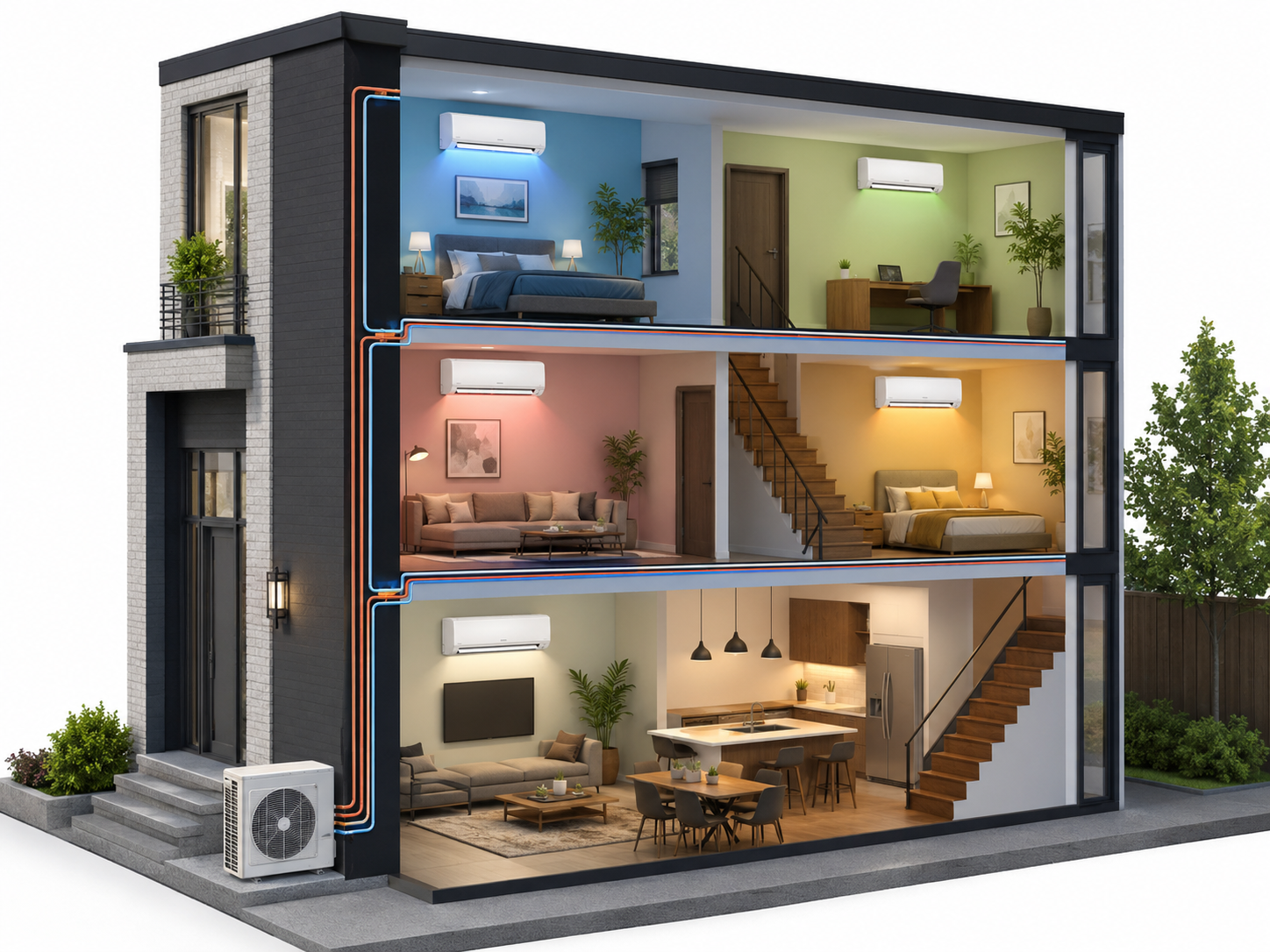
A typical system includes one outdoor unit and one or more indoor units. The outdoor unit transfers heat between the building and the outside air, while the indoor units deliver warm or cool air directly into the living space.
How Ductless Mini-Splits Work
In heating mode, the outdoor unit collects heat from outside air and transfers it indoors. The indoor unit then releases warm air into the room.
In cooling mode, the system works in reverse. It removes heat from inside the room and releases it outdoors, helping the space stay cool.
Because mini-splits move heat instead of creating all heat directly, they can be an efficient option for many buildings.
Single-Zone and Multi-Zone Systems
Ductless mini-splits can be designed in different ways.
Single-Zone System
A single-zone system connects one outdoor unit to one indoor unit. This is useful for one room, a basement, a garage, an addition, or a small apartment.
Multi-Zone System
A multi-zone system connects one outdoor unit to multiple indoor units. Each indoor unit can serve a different room or area, allowing more flexible temperature control.
Where Ductless Mini-Splits Are Useful
Ductless mini-splits are often used in buildings where ductwork is not available or would be expensive to install.
They can be useful for older homes, apartments, home additions, converted spaces, offices, bedrooms, basements, and rooms that are too hot or too cold compared with the rest of the building.
They can also be used as a supplement to an existing heating or cooling system.
Benefits of Ductless Mini-Split Heat Pumps
One of the biggest benefits of ductless mini-splits is flexibility. They can heat or cool specific rooms without needing a full duct system.
They can also provide zone control, meaning different rooms can have different temperature settings. This can improve comfort and reduce energy waste in spaces that are not always used.
Another advantage is installation. Since ductwork is not required, installation can often be less disruptive than installing a full central ducted system.
Things to Consider
The indoor units are visible, so placement and appearance should be considered. Some people like the modern look, while others may prefer hidden ducted systems.
Proper sizing is also important. A unit that is too small may struggle to heat or cool the space, while a unit that is too large may not operate efficiently.
The location of the indoor and outdoor units, refrigerant line length, drainage, insulation, and installation quality all affect performance.
Ductless vs Ducted Systems
Ductless systems are often better for room-by-room comfort, homes without ducts, additions, and smaller zones.
Ducted systems may be better for whole-building heating and cooling when good ductwork already exists.
In some buildings, a combination of ducted and ductless systems may provide the best result.
Final Thought
Ductless mini-split heat pumps are flexible, efficient, and practical for many homes and buildings. They are especially useful when ductwork is not available or when certain rooms need better temperature control. With proper design and installation, they can provide year-round comfort while supporting energy-efficient building performance.